**[00:00:00]**
Hello everyone, welcome to the web talk show. My name is Amando Prescar and with us today is Vipul Doshi from Zenvoya. How are you Vulle? >> Doing very well, thank you. >> I'm very happy to have you here today because we are talking about travel which is a subject that me and my family really enjoy. Can you tell us a little bit about how you started and what got you to where you are right now? >> Sure. Sure. So I I've been a tech person all throughout. I started my career very early in the days uh back in 1989 as a programmer in the industry and um o over the 10 year period I actually uh did various different tech sts and then finally I moved into the travel industry and then I spent about 20 plus years in the travel industry working with uh building a customer experience company in the travel industry, a company called IGT Solutions. I was the the literally the founding CEO of the company and I built it up across the travel industry. And when I say travel industry, to me, whatever a traveler touches when he is traveling or she's traveling for me, that's the definition. And so if you touch an airline, a hotel, uh car rental company, um restaurants, uh places to see, visit, the entire ecosystem around traveler is of great interest to me. And I built the customer experience company in that space. And when I say customer experience company, just let me elaborate uh that a bit more. it any any interaction that a customer would have in terms of whether they're building an itinary with a travel agent a human travel agent or or building it on a
**[00:02:00]**
let's say a new age AI uh platform chat GPD or somewhere >> um and then from there they basically once they build a trip then they go on doing various things so to me that's what uh the company that I built earlier that's what It touched every aspect of traveler whether it was flights, hotels, everything. And then I um this this company was largely around human beings. So how how can we help uh how people can help the travelers? And so I had a great I think a great time building that up for about 20 years. And then I said to myself, well uh is there an opportunity to do something different? something where and every traveler and I think as we go along we'll talk about it but every traveler has their own stories to tell their own travel trails to tell what didn't work really well so amu that got me excited and that's got that's what got me started into Zenoa a completely diametrically opposite of what I used to do at IGT solution the core thesis being the same it's a traveler and the experience around the traveler but now can we do it more efficiently and a better job. Every rich person today in the world, every senior executive in the world has a travel assistant, somebody who's taking care of you all the time. Well, what about the large population of people? Uh, can we democratize the travel assistant that the rich and the famous have and can we build something for them in a way that the travel becomes a joyful experience? Uh, that's really what I set myself as a target for. That's nice. From our experience, like I said, we like to travel. We enjoy traveling. Ever since we got married, we traveled a lot. >> And the experience of preparing for a trip isn't always
**[00:04:00]**
a nice smooth ride. There's you have to check with some websites or agencies for flights and some for cars and some for hotels and other ones for attractions and it's all over the place. And sometimes you get prices that are good, sometimes prices that are skewed, sometimes prices that are just inflated because of whatever reason that you're not privy to. And so like you're saying, yeah, people who have someone who does this for them, it's great because they know the tricks, they know the people, they they do the things, and you just travel. >> So that messy part, >> if it could be made better, I'm all for it. >> Yeah. Yeah. When you considering people wanting to take this off of their shoulders? Like what made you think, oh, every day people also want something like this? Mhm. >> Versus having them do everything themselves. >> Okay. Great. Great. Uh and and you hit all the right things for me actually to be honest. Uh so I'll give you I I'll start where you started with go multiple websites, figure out a plan. Well, I would go one step even further. Most people travel in a group. And when they travel in a group, if Arando is the central person organizing the trip, you might put a plan together, but everybody will have a comment on it. Everybody will say, "Well, I really don't want to do this." If you're traveling with kids, the kids want to do something more enjoyable to themselves. If you're traveling with other people, somebody
**[00:06:00]**
might want to do museums. somebody might do and even before you get to the actually the booking part I mean this is so much out there so and then everybody will have a different budget as well if if it's not a family if it's a group of friends traveling they'll have their own budgets >> um so there's so much to balance uh between different people >> so that's really where we started thinking about okay how can we do that can we help on putting a group travel collaboration tool [clears throat] and and of course you can do individual travel as well. I mean um go through you go through multiple sites there can we help you do that >> or can we provide you a group travel chat where maybe you're at the center of the the planning but you are taking feedback from everybody on the plan that you put together. We suck everybody's feedback into the the [clears throat] into the tool and that's all part of the tool by the way and then we say okay now looking at everybody's interest the group is going to be more happy doing this and there might be >> some points in time in a particular there might be some things that you will do and some things somebody else will do so that's also a possibility I mean so we allow for all of that and then of course uh once we know and and all throughout this uh amando What we are trying to do is not just take a simple search where you say in in a typical OTAA OTA I don't know if you're familiar with OTAAS these are like Expedias and Price Line and others where you'll just simply go and say from date to date >> start of the uh or the departure station to arrival station >> and then uh class of travel etc. Now we are we have taken this a little different uh approach to it. We'll say why don't you just tell us what you want to do it in a human natural language just tell us whether you want to write it or you want to speak about it but just tell us what you want to do you
**[00:08:00]**
might say well I want to go to a a little warmer place friendly to vegetarians my budget is this much the type of hotels I really like are large hotel chains like a Marriott or a Hilton the type of airlines I like typically to travel on is uh maybe United or Air France on scalem something like that and you might even go to the extent of saying when you find me a hotel find me near this location >> in this budget with free parking free Wi-Fi >> up upper level room lower level room uh on the flight I would prefer an is seat if there's no seat I'll rather delay my flight uh departure time uh you just say what you like and you when we read all of this We'll say what is a musthave, what is maybe uh nice to have and that we will use the set set of I mean should I say dimensions to search for the right hotel the right flight the right activities that you want to do at the destination and when I come in for exactly the same set of dates exactly the same location [clears throat] but I might say no no I am a lowcost traveler I like budget travel and therefore find me a hotel that is in price more than $80 or $70 a night and then I don't mind um eating all different types of cuisines as long as they're within this budget. We both are going to the same place but we're different. >> Uh now if you go to a classical OTAA you will not get the ability to say all of this >> or the the or the the classical way of booking travel and searching for travel. >> So we we try to pick your preferences. We try to understand which one of them is something that we need to really absolutely
**[00:10:00]**
deliver to you >> and which one of them are. So we'll assign I mean now I'm getting a little technical but we'll assign different weights and dynamically for different people and >> if you stay with us and you have been conversing with us for a while I mean you are engaging with the platform then we'll know more and more about you sometimes you don't even have to tell me again you don't need to repeat that again and again I mean if you're a vegetarian and I've said that to you once in my previous trip why do you need to tell me this again [snorts] so that's the sort of u platform that we are building take understand the preferences understand what's your intent and intent understanding is a very nuanced thing. So as nuanced as we can get and then then really figure out what's the right flight, what's the right hotels and we will not inundate you or flood you with 100 different flight options, >> 500 different hotels. >> Yeah. >> And then say use filters to figure out which one works for you. So we take away the work hard work from you. We bring it to ourselves and if we know you well and we understand your intent well we have the context the conversation we'll try to build you hopefully a perfect now we do we do get constraint we do constraint by what's the airline and the hotels what what do they have offer but we will within those constraint we'll still try and let you relax a little bit and help you do the work uh ourselves >> that is really neat for those who don't travel if if some of our listeners don't don't travel often or or or haven't traditionally traveled often but maybe want to >> some of the things you might you're saying might make sense for some and for some they're they're going to be like yeah how complex can it be right but but just as you're talking there's there's a bunch of things that come to my mind of past experiences where >> there's things that you would have been very glad to know beforehand just just
**[00:12:00]**
for a flight like if you're going book a flight to somewhere. >> You get, like you said, maybe 16 options. If you go on Google flights or something or Expedia, you're going to get like 16 options. Different flights, different airlines, different hours, different amount of stops, >> right? And then classes, of course. So, they're going to show you the economy and then there's economy plus and then there's premium and then there's premium and then so there's a bunch of but not all airlines have it. And then what airplane is it? So you might feel like, >> oh yes, absolutely. >> This is great because you're comparing it for a human it's very hard like I I'll just say you you look at it and it's like oh okay this time against this time and first you're comparing times cuz you're like I need to like has to make sense and then by the time you've compared all the times and the stops and maybe the class you don't realize that they're completely different aircraft >> and one will have more space >> than the other. There's not gonna be luggage uh space available for carry out. Like there's there's so many little things. >> Yeah. Why do you want to travel widebodied aircraft like what you said correctly or are you okay with those smaller jets and people have preferences? I mean I know for sure that my daughter when she travels if I can't find her seat she won't. I mean people have I mean I like for an example I like to travel by larger aircrafts not by the smaller because the flight could be bumpy versus not so bumpy. so many different reasons. All of us have >> and then there's little things like this just happened to me the other day. I went to give a workshop and when I was looking to check into the room >> m >> I don't know what came over me and I checked it gave me the option to choose which room in the app and I like typically just choose whatever >> or high floor or low floor but I decided to ask an an assistant >> and
**[00:14:00]**
it turns out that I'm glad I did because part of the building had already been remodeled and part hadn't. So I had like a real choice between the options that I had once I checked that I had to choose between a very specific segment of rooms to make sure that it was already remodeled and that it wasn't like right next to the elevator and that it wasn't right underneath the fitness >> area right >> which normally I don't check all that but because I had assistance from >> Gemini whatever I was using at that like driving from [laughter] the um it helped me out. So I can imagine a platform like this >> having the context to check all that sort of thing based on preferences could be so helpful. >> So we we when we start thinking about all of this for us >> it was a very broken system. I mean and and I I have spent 20 years like I said working with all the major players in the industry but they were my clients and I was taking work from them and doing exactly the same helping helping their travelers out. >> Mhm. It [clears throat] was very evident that this is a very broken uh world of I mean world of systems and um the opportunity with AI coming in when the generative AI got announced back in November 2022. I still remember that uh the opportunity looked like oh I can create a connected trip. I can create a trip that's end to end. I'm helping. We haven't even talked about what happens when you are on the in the journey when you are actually and >> because today's systems are transactional systems. They will sell you a flight and they're gone. >> They will sell you a hotel then you're your own. Um you buy because you are assuming there's a certain brand and
**[00:16:00]**
that you'll get a certain experience. But when you call their call center for help and when you are asked to wait for anywhere from 15 20 minutes to back in the day even 3 hours or just leave your number and we'll call you a day later. I mean imagine for a traveler how difficult that would be when they are on their journey. >> So nobody is really thinking of the traveler while he's on the journey. And I think that moment has come when and and the only person who could could who would get help in the good old days would be the ex the one who had an executive assistant or an assistant helping but for the masses where was the help and that's what prompted us to think can we do that now we don't leave the traveler right after the tickets are sold or hotels are booked we we are we're done we actually stay with the traveler throughout the journey and I I mean one of the things that we do uh and we built an assistant called Zoya. Zoya stays with you throughout the journey and proactively proactively is important. Proactively watches for you if it's going to rain if the flight's going to be delayed. Who is informing the hotel that Armando will check into the hotel at 11:00 p.m. in the night? So don't give away his room. He's still going to Who's going to do that? >> Mhm. >> And you're on a flight. you don't have Wi-Fi access and you're on a long flight so you don't have the ability to inform the hotel. We will be watching your trip and actually informing the hotel the arrival time of Armandu into the hotel and therefore don't give away the room or you decided that you're going to London and it's going to be a day in the park let's just say um or Central Park in New York um well it's an outdoor activity that you were planning but so it turns out that it's going to Yes. [snorts] So
**[00:18:00]**
either you carry an umbrella with you and be in the park or you do something else on that day. >> Who's watching out for you today? No one because you're on your own. You figure out an alternative. We we know you well. So we'll say, well, you know what? You really like theater and here are some options that you couldn't go to. And instead of doing the outdoor activity today >> in the rainy outdoor activity, here are some things that you can do. If you say, "Yeah, I like that." One of them you pick one will actually help you pro buy the tickets as well for that theater. So we think that we are trying to build a relationship with the traveler throughout the journey. Be there be on their side when they are traveling. That's really what amount of got me at least uh to be hon your original question what got you started that's really what got me started >> that's really exciting I people especially with Chad GPT and claude and all these people are like oh yeah the demos that they show yeah you can do it'll handle your booking of flight since the beginning they were saying you could do that >> it doesn't really like it'll it'll do some of it and it'll help you like the other like that specific thing I asked it for and I prompted Ed, it gave me what I needed. But booking a full experience and a full trip, it's not realistic because there's so many variables like you were saying. And sometimes they make mistakes as well. And and and if it's not a platform that's tailored to the travel experience, then there's there's bound to be issues. And of course, it's not going to help you along the way. [laughter] I I like this idea of of having someone to contact because all of the funnily enough all these scenarios that you're talking about like having to let the hotel know, hey, hey, yeah, we are
**[00:20:00]**
actually arriving at 11:00 instead of at 4:00 or maybe we're going to get there at 12:00 >> um because the flight was delayed or the previous flight was canceled or whatever. Um it has happened and I've been in that situation where where you can't reach them. >> Yeah. And it's very very stressful when you're going with the family and like what are we going to do if if we get there and the the room is gone. >> Yeah. >> Right. And so that sort of thing is is really useful. My question here becomes how how do you achieve that? How how can you suggest tickets and get tickets for people for for like the theater or for the airlines etc? I understand the suggestion part but does it behind the scenes interact with other systems to make purchases? Is there someone in the loop? Like how does that work? I'm interested in seeing sort of the the is the experience as seamless for the traveler and your team just takes care of of everything that needs to be done for that to happen or how does that work? >> Great question. Um so it's a maze out there. Um and and that maze today the tra in in the real world today the traveler is navigating through that maze and gets confused and gets angry and upset different things with uh at different points in time during that that entire trip and the thing is that there is an opportunity now to build that connected trip. We take away the complexity out of the traveler and we say we'll deal with that all that complexity now because we can carry the context all throughout the journey. We carry the intent of the traveler. We understand and we can deeply personalize with today's technology. So that's where we undertook
**[00:22:00]**
the task of building a what should I say a supply pool which is we have an inventory. We went out and connected ourselves with multiple different consolidators people who sell inventory of flights of hotels. We connected up with companies that do experiences. We connected up with all of this. So today when you look at Zenoa you probably get 400 different 500 different airlines and thousands and thousands of flights that those airlines fly. We have I think a minimum of 3 and 1/2 million properties today already hooked up onto our system. Another half a billion activities that are already onto the system. So we've done the difficult job of connecting into all of these and then orchestrate between all of this. So that that's where the AI comes in that we orchestrate between all of this using the context personaliz using using deep personalization >> all of that and then the results that we give you and when you look at it I mean just a few hotels a few flights that actually suit your requirements you don't do the work the backend engine does the work our thesis at the time when we started out was we want to be like an Apple >> uh an iPhone that's so simple to use that doesn't mean there's no complexity at the back. I mean the engineers did all the hard work and made it simple for the user to just use the phone an iPhone right I mean so that's what we are u sort of working towards um I would say that we are fully there but I think we are beginning to knock off many of these uh pieces uh for the traveler now we are constrained I like I said earlier we are constrained by what an airline will allow us to do or what the hotel policies are if a hotel says no no my policy is you didn't show up, I'll not
**[00:24:00]**
let you check in. Um, too bad. I can't do anything about it. I can just say I know the policy. I can go and tell you that this is a policy. >> Mhm. >> You may lose money, but at least I'll help you find another hotel room >> that night, >> which is what you want at the end of the day. Just you should know the policies beforehand. Maybe a lot of times we don't read them because it's in the fine print. But if you show it because it's part of the >> experience, then >> yeah, >> I think we talk a lot about tools >> for the show and and and whenever I do live streams, it like very specific tools for a very specific task. >> And especially nowadays, >> you can extract the important details that you need to surface to the user at the right time. And that changes so much >> the experience that they're getting because in their old system everything would just be there >> and there's nothing you can do. You have to find it. But but now there's there's ways for you to pull out what's relevant >> based on the profile that you built for them and then show that which is important. I I can think of an example we had recently. We were planning a family trip and with extended family and there's one person who wanted to use the pool, right? And so now we needed to find a hotel that matched that >> pool. It's a pool. Not only that, >> but once you're looking, you find out that two of them, the pools are closed for renovation >> and so those are no longer in the picture. So I imagine a platform like this can can surface that so that absolutely you don't have that issue. >> Yeah. And if if you taking your example, the hotel may not even advertise that our pools are closed. >> Of course, of course. >> But the users But the users of the tra or the travelers who went to that hotel and wrote reviews and said, "Oh, the pool was closed. Everything else was great, but the pool was closed." >> Mhm. you read the reviews as well before I come back and say based on what you
**[00:26:00]**
need I need to find a hotel that has a pool that is also open. >> Mhm. >> And and and so you you have that information all of that information out there. You just have to dig through all of it. Today you do it yourself. >> Exactly. >> What we is saying will take care of it. >> That's great. That's great because that's that's the painful part. All the time spent looking through the reviews, making sure they're the recent ones, making sure that there's nothing saying that it already opened again and that sort of thing. And then if a system can take care of that for you, it just removes so much of the stress of planning the trip >> so that you can actually enjoy it. >> Yeah, >> that's really neat. >> Where where does it work mostly? Is it is it like a US thing? Is it a Europe thing? Is it where where where do people use it the most or where is it operating specifically? I think listeners would like to know. >> Sure, that's a great question. Uh so we we are up and running in the US market and so anybody in the US can actually get on to zenvoya.ai AI uh login uh with an I mean and create your own user ID and then you start working with Zoya uh just the way we've been talking about it. You just communicate, you talk to it, you write to it and and and over a period of time you build a personal personality all of that. So it's operating in the US today fully. We are a global player. We intend to go to all parts of the world. Uh however we are also looking at a different distribution model because uh bringing traffic bringing people to the website is not an easy thing. These uh large players spend billions of dollars
**[00:28:00]**
on Google ads on kayak everywhere and and then they buy basically they buy traffic and they bring them to their side. So we are looking at a slightly different distribution model. So we are up and running as Zenvoyer.ai and we are doing our organic bit as well. But we are also at the same time working with customers who already have a a a large customer base of uh loyal I mean I should call them loyal customers. uh those who already for example sell a flight or sell a for sell foreign exchange or somebody who has so let's say a delivery app company uh food delivery app company they have a whole bunch of customers already loyal they all want to expand their offerings to their customer they want to monetize other parts of the journey if you are an airline and you just sell flights and you want to monetize hotels and experiences and really provide the connected journey experience that product is there. If you are a retailer and you today sell only certain merchandise, but you could actually be offering travel as well. Our platform is a plugandplay platform. You have the ability to bring in your branding on the platform. So, we honestly don't really care if it's just going as.ai or is it going as XYZ uh com's own? Uh so it's a white labelled solution in the more technical terms. >> You can put your own logos, your colors, your wipes, you can change your font. You can say well I don't really like this group travel thing. I can switch that off. I don't want to provide experiences. Switch that off. I just want to do flights and choice is yours. It's a very configurable platform. But that's the distribution model that we have chosen is to really work with customers and enterprises that already have large travel base. I'm glad you touched on that because part of our listener group is
**[00:30:00]**
entrepreneurs and business owners and some are starting out and some are have been in the industry for a long time. >> And from afar we see these apps, we see these services and some of them grow tremendously fast. And if you don't know really what's going on behind the scenes, you're like, "Oh, wow. Okay, that's how it works, right?" But but you you touch an excellent point. advertising. A lot of these private equitybacked, VCbacked, um different types of investmentbacked organizations have a lot to spend on advertising and marketing and that can get you very far or nowhere at all, but at least you get in front of people's eyes, right? And so a lot of people don't don't realize the millions and millions of dollars that are spent that way. So, some people do it, some people some companies do it, some companies don't, but it's it's a quick way to get in front of people, but it's not the only way. >> And so, advertising, >> if you're starting a business, makes sense if you have the capital to pull it off >> or if you've already found the winner ad that you know what the return on ad spend is going to be. But if you don't, it's going to get very costly very fast before you actually learn if you're reaching the right audience with the right message. So there are many alternatives, organic, of course, social, live, there's there's a lot of different options, but there's also collaboration >> types of marketing like referrals >> that you're talking about, which is excellent because there could be someone in your industry or a industry that is a sibling to your industry, which you share customers. you don't compete necessarily, but then you can make these agreements where someone gets a kickback or something or they just expand their reach because they're using etc. And there's other ways like you're explaining to reach many customers without necessarily having to pay for for ads. >> And if I may, if I may, somebody is
**[00:32:00]**
going to pay for that advertising dollars as well. >> Yeah. >> So the cost of operating eventually keeps going up. >> Mhm. And that's yet another thing that in in my head was going on when I looked at the balance sheets of these large public retraded online travel agents and I looked at their balance sheets and say half of their revenue goes in just advertising. >> Can I do something different? Can I actually come in a way that the the cost comes down and then the traveler benefits? So that's another thought around this whole subject. >> That's a great point. Yes. Because if somebody's going to pay >> Yeah. If if you don't spend half of of your budget of of your revenue in advertising, then that money can go into the product and make it better and the experience >> and uh that's a that's a great message to get out there as well. I I'm wondering within a system like this, do people use it as one person? Is it like one person creates an account and then they manage travel for their family and their group or do does each person grown-ups obviously uh create their own accounts and then they might link up together in a group plan? How does how would all that work? >> Oh, great. Uh so yes um it it's a one person who creates their initial account if it's a group creates the account but they can invite others their the people who are traveling with them. >> Mhm. >> And and and they will all get an account as well and therefore while you're doing a group travel you could also at a future point in time all of you do your individual pieces as well. So you have the ability to collaborate on a certain itonary together. >> Mhm. And you also have the ability to build your own iter and your own plan on your own tickets. So you're building
**[00:34:00]**
your own persona with us all so that we understand you deeply well and at the same time if you're doing it as a group then then you can just invite those people and then they become part of the so yes it is uh it is the ability to do both individual or or a group >> is there from I mean you've been in the industry for so long is there something you can share with the audience about you you mentioned earlier here that that the big part of the industry is broken the the experience like how things are are functioning. Is there something that you can like quickly relate to that that you think a lot of people will say, "Oh, yeah, that has happened to me." Right? Just because it's it's such some we forget and then we remember right when it happens again on the next trip, right? >> Yeah, we always do. Uh yeah, I mean very simple. I mean um you booked your tickets and your flights and your hotels everything the entire trip and then uh this situation happens for you personal emergency happens to you and you need to cancel something I mean you have to cancel your trip and you will you will start that process either going through each one of them yourself or you will just tell Zoya hey I have this situation I'm not going to be to travel. Zoya, go ahead and cancel the entire trip. Zoya will do that. Or your I'll just give you one more. Your flight got cancelled. You are at the airport. The flights flights got cancelled. It happens all the time when you're traveling. Um bad weather, mechanical issues, the flight gets canled, but you're booked for the entire trip. You have subsequent you planned activities, you planned outdoor activities, you planned a hotel to stay
**[00:36:00]**
in. Zoya will proactively monitor that this flight is at risk. And how do we calculate that? We see that there's a constant delay. I it has happened to me personally. I'm sitting at uh at uh O'Hare airport waiting for my flight and they say it's delayed by an hour and then when an hour comes in they say oh it's another hour it's delayed and it has happened to me that at 11:00 p.m. the night they will say flight's canceled. Well, you don't have a hotel room booked now for the spending the night at the airport, right? You are not going to sit sleep on the at the airport. You need a hotel room nearby. Most people will immediately start looking and figuring it out. Well, Zoya will actually proactively understand that there is a very high likelihood of this flight getting cancelled because it's seeing the pattern and then come to you and say do you want to book a refundable hotel night because there is a high probability of this getting cancelled. Book a refundable room night just in case of flight cancel canceled you have a place to go to to sleep at that night. It has happened to me so many times. I mean at over here it's a very common thing for a lot of people. >> So yes, these are real situations that happen and we are proactively trying to solve that. Solve for that. >> I like that. I think this is a good example of what AI can be used for in a good way. There's there's all this talk from some people who don't if they're not close to it where they're software engineers etc. Some people even think that it's a myth. They think it's a scam. They're like, "Ah, AI, it's a scam. You're using data centers and burning." It's not. If you are in the software, you'll know it's tremendously useful cuz it can get a lot done a lot faster, a lot cleaner, a lot better, more performant, more scalable, etc. But
**[00:38:00]**
in the general world, there's so many good uses of it once you understand that it's not a tool to just create bad content like some people do. It's actually very good at helping with decisions, understanding profiles, looking at large amounts of data and making abstractions that you would have otherwise not been able to do as a person or you would have to an expert like you in that industry. And so for the rest of us and this example is a very good use case of it's not just let me just use chatbt or cloud both of which I I use constantly >> but it's not just this just use that for everything. No, they're good examples of of to general tools, but I think the best uses of AI are where you go into an industry and you find the pain points that people are having >> and you build something that uses models behind it to provide a much better experience for the people in that space. >> Absolutely spot on, Nando. This is exactly how AI should be looked at. It's a great tool but you have to build it to solve the problem of that specific industry or whatever it is at hand. Uh you have to build the guardrails because it there is a possibility that it can hallucinate. Now that's the the difficult part right. I mean if it hallucinates about a flight that you're going to catch >> Mhm. >> you had it. I mean >> yeah you you don't want that right. So you need to build the guard rails. >> Mhm. >> Fully knowing that yes I mean sometimes it can just make up a scenario there's no flight there's no such flight that exists it's show you a flight >> it's that >> that's a very good point so for those who don't know AI can the industry it's called hallucinate and what happens is
**[00:40:00]**
if it doesn't have the information to answer something and it happens less with modern models it's not the model that got so much better but the harnesses the tool that uses the model got better at sort detecting that but but still it happens. If you ask it something and it doesn't know, it will sometimes make it up. And that's the hallucination that Vool is talking about. And so, especially with data that is not generally available, like a like flight data, for example, if you don't give it access to a database of real-time flights, then it might invent something to please you, give you the answer, which is scary when you say it, but it does happen. But if you build the tool properly, then you can have it only give you references when it's pulling it from a specific source, an API or a database, and then you can cross check, etc. to make sure that it doesn't happen and and again I'm very happy that you mentioned that because that's another reason for creating tooling because >> the generalized tools like chatb and cla the app themselves, they are general. So unless you give them very specific direction that can happen more often. Whereas it's very specific tools like there's there's AI tools for law >> that are very good but they're very tightly controlled so that that doesn't happen. >> Exactly. >> Right. But if you ask Chad PT for legal advice then it might might do a very good job but it also might not. And that's that's a whole thing. They're non-deterministic tools. So it's not always >> an exact output based on an input. >> Exactly. Exactly. And that's what you have to watch for when you build anything. >> This is this is great. And now have you I don't know how technical you get in all of this, but there's there's this new model that came out that's called Jev >> and it is the one of the inventors or creators of Chad Gypt >> built it. um took took a while to build it sort of in the dark and then just came out with it a few few days ago >> and the internet at least in MySpace is going wild for it. Why? Because this is
**[00:42:00]**
not a chatbot. It is not something that gives you a bunch of text back. The only thing it gives you is decisions. >> So you can feed it a lot of data and then ask it parameter parameterized questions >> and it will give you specific deterministic answers based on the data. I need to go and research that and and see where we can use that. >> Yeah, that should be >> it will take a lot of our hard work that we do today. Maybe it it does >> because you put you put a lot of this work into an LLM and it costs a lot to run and it has to process. It has to think and it has to and this model just decides and based on on the parameters that you give it and it's really good at rubrics. So if you have rubrics to score things, it just goes and it does it in milliseconds. It's tremendously fast and tremendously cheap. And so for things like the things we're talking about where like flights for example, you can have it as a last pass where before it gives you a recommendation already went through the database, the API, the models think it's the right recommendation. Then this can be here and just do a very quick pass to make sure that it's a real thing. And it it is >> that that's why people are are going crazy about it. It's not like a magic thing that will work for everything but for decision making >> it is it is incredible. >> Now I'm going to check this out. Yeah. Maybe we we can use this for some of the things that we're trying to do. Make it easier for us as well. >> Yes. Well people there's there's so much that we talked about in the travel industry today. I I'm excited that we did because again we love travel and and I'm very excited. I'm gonna look at Samoa as well because again we've had all the experiences of like having to cancel having an event that you're no longer going to make and does it have a cancellation policy and and all that and and it it it just affects your >> your overall experience. So I'm glad you guys built >> this this tool. Before we go, what would
**[00:44:00]**
you recommend to people who who maybe are not constant travelers, but are thinking of traveling, maybe they've had that that thing where like, I don't know if I want to travel because it sounds like it's complicated. What would you recommend to people apart obviously from using Seavoya um that that they do or they keep in mind >> to to to get a good experience when they actually go on a trip? H good good question. Uh I think when people even today when they travel out um I think today they have the opportunity to plan a lot better think of things that they may not have thought about earlier all of that before they head out. So that's one thing that they must uh utilize the tools for and two they should potentially see when I run into a problem how do I what's the fallback mechanism I have you are you've gone to one of these exotic places middle of nowhere late night your flight got cancelled same situation you had a flight to cash flight got cancelled now how do I figure this your purse, your travel agent, whoever it is, whether it's eno or anybody else should be there available 24/7 for assisting you to sort that problem out for you. I mean, that's my recommendation is now with the technology being so far ahead, it's time to sort of think differently, do things differently and and make it more joyful, which is something that I I mean I believe has been missing in this industry, which is very fragmented, broken. So that's really the the big beautiful opportunity that we all have today. >> That's great advice. I think people should take this and and consider, okay, there are things that could happen. How will I
**[00:46:00]**
manage it or do I have someone that can respond? >> Right. >> Exactly. Yeah. >> Excellent. And if people want to try out Zenvoya, what was the URL again? >> www.zenvoya.ai. Okay, I'll put that in the show notes as well if anyone wants to try it. >> Great. >> It's uh it sounds great. I I haven't tried it. Full disclosure, I have no idea how it works, but it sounds amazing. And uh I think on our next trip, we can look at it and see what uh what it can do for us. >> And I and I look for feedback from you, Amando. Thank you so much. >> Thank you so much for coming on the show. And everyone, if you haven't liked and subscribed to the show, please do so. That way you are going to be the first to know when a new episode like this one with people comes along. Thanks everyone. Thanks people and we'll see you in the next one. >> Thank you so much Amanda. Thank you
 Can we democratize the travel assistant?(plays the Short)
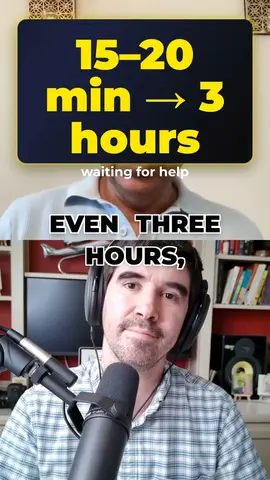 They sell you a flight and then they're gone(plays the Short)
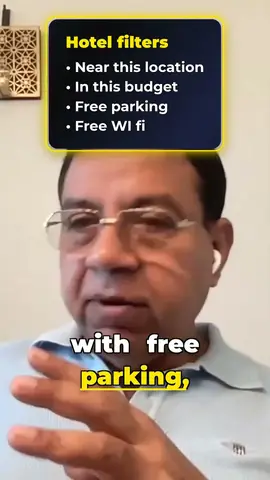 Just say you want warm weather and vegetarian food(plays the Short)
 Why 500 hotel options is the wrong answer(plays the Short)
 Two hotel pools were closed for renovation(plays the Short)
 They spend billions buying traffic from Google(plays the Short)
 A white label travel engine you can switch parts off(plays the Short)
 Half their revenue goes to advertising(plays the Short)
 Book a refundable room before the flight gets canceled(plays the Short)
 It's going to rain on your park day(plays the Short)
 The best AI picks one industry's pain points(plays the Short)
 If it hallucinates your flight, you've had it(plays the Short)
 3.5 million hotels and half a billion activities(plays the Short)
 What hallucination really means for flight data(plays the Short)
 We wanted travel to feel like an iPhone(plays the Short)
 Before you book, ask what your fallback is(plays the Short)